Cart
0
You may also like


It is day one. You have a 10 o'clock class or a client call, the hot water bag is somewhere behind the winter blankets, and someone at home is telling you to drink ajwain water and not take "those tablets". By breakfast the cramp has moved from your lower belly to your back and down your thighs.
Most of us were taught to sit through this quietly. You do not have to. There is decent research on what eases period cramps at home, and some of it is cheaper than anything you can buy. There is also a short list of signs that mean the pain is not "just cramps" and needs a doctor.
This guide to period cramps relief at home looks at the common remedies and how good the evidence is for each, gives you a simple plan for your next cycle, and is honest about where herbs fit and where they do not.
Before and during your period, the lining of the uterus releases chemicals called prostaglandins. They make the uterine muscle tighten so the lining can shed. Higher levels mean stronger squeezing, less blood flow to the muscle for short spells, and that familiar deep, dragging cramp. The same chemicals can cause loose motions, nausea and headaches on day one.
Doctors split period pain into two types. Primary pain is the common kind: it usually starts within a few years of your first period, sits in the first one to three days, and has no disease behind it. Secondary pain comes from a condition such as endometriosis, adenomyosis or fibroids. It often starts later in life, lasts longer, or keeps getting worse. Everything in the home-care sections below is about the first type.
A 2024 review that pooled 48 studies of rural and tribal adolescent girls in India found that about 55 percent had painful periods (Chatterjee and Chakrabarty, Anthropological Review, 2024).
Here is what the research says about each option, with the strength of the evidence spelled out.
Your grandmother was right about the hot water bag. A 2019 review of self-care for period pain, covering 23 trials and 2,302 women, found that heat applied to the lower belly gave a moderate reduction in pain, and still added benefit when compared against painkillers alone (Armour et al., BMC Complementary and Alternative Medicine, 2019).
The trials used heat patches kept at about 38 to 40 degrees for 8 to 12 hours. A bottle that goes cold in twenty minutes does less. So refill it, wrap it in a thin towel, and keep it on through the worst hours. A warm bath may also feel good.
Two safety notes. Never sleep on an electric heating pad. And if you have diabetes or reduced feeling in your skin, check the temperature with your hand first, because low-heat burns can happen.
In the same review, low-intensity exercise (stretching and simple yoga postures) gave the largest drop in pain of any self-care method. The studies were small and varied a lot, so the exact size of the effect is uncertain, but the direction was clear.
You do not need a gym. Ten to fifteen minutes of a slow walk, child's pose (balasana), cat and cow stretches on all fours, and lying on your back hugging your knees to your chest is enough to start with.
We make herbal supplements, and we will still say this plainly: for many women, a painkiller is the most effective option on a bad day one. Anti-inflammatory painkillers work by lowering prostaglandins, the chemicals that drive the cramp. The NHS suggests painkillers like paracetamol or ibuprofen, with stronger anti-inflammatories available from a doctor for severe pain.
Ask a pharmacist or doctor which one is right for you, and follow their advice on dose and timing. Check with them first if you have acidity or ulcers, asthma, kidney or heart problems, a known allergy to painkillers, a fever (especially if dengue is going around), are pregnant, or take blood thinners. If you need painkillers every cycle, or they stop working, see a doctor to rule out an underlying cause.
Among kitchen herbs, ginger has some of the better research for period pain. A 2024 meta-analysis found that ginger reduced pain intensity and duration compared with placebo, and showed no clear difference from common painkillers in the few head-to-head trials (Moshfeghinia et al., Journal of Integrative and Complementary Medicine, 2024). The authors also warn that many of the trials had a risk of bias and safety reporting was thin, so treat this as promising, not settled.
The trials used measured doses, not a cup of chai. Still, fresh ginger simmered in water for ten minutes, or a pinch of saunth in warm water, is a cheap and gentle first step for most people. If you take blood thinners or have a bleeding disorder, ask your doctor before using ginger in larger amounts.
In a 2015 trial with 114 college students in Iran, women who took 420 mg of cinnamon three times a day had less pain than the placebo group from about eight hours onwards. Ibuprofen, however, worked faster and better at every point measured (Jaafarpour et al., Journal of Clinical and Diagnostic Research, 2015). One small trial is a hint, not proof.
Also, much of the cinnamon sold in Indian kitchens is cassia, which contains coumarin. A little in your food is fine. Spoonfuls every day are not a good idea, especially if you have liver concerns or take blood thinners.
"It is normal, bear it." Some discomfort is normal. Pain that keeps you in bed, makes you miss college or work, or makes you vomit is not something to just put up with.
Lying flat all day. Rest when you need to, but the evidence points to gentle movement, not stillness.
Ajwain water as the only fix. It is a much-loved desi remedy, widely used for digestion at home, but we could not find good-quality research on ajwain for period cramps specifically. If it comforts you, drink it. Just do not let it stand in for things that are better proven.
Cold water and curd rules. We found no good research showing that cold water or curd makes cramps worse. If warm food feels better on day one, eat warm food.
You can start this today without buying anything.
Keep a three-line pain diary. For each day of your period, note your pain from 0 to 10, how many pads or cups you needed, and any tablets you took. Two or three months of this tells a doctor more than any single visit can, and it shows you which changes actually helped.
See a gynaecologist if any of these are true. This list follows the NHS guidance on period pain.
Conditions like endometriosis can go unrecognised for years because the pain gets brushed off as normal.
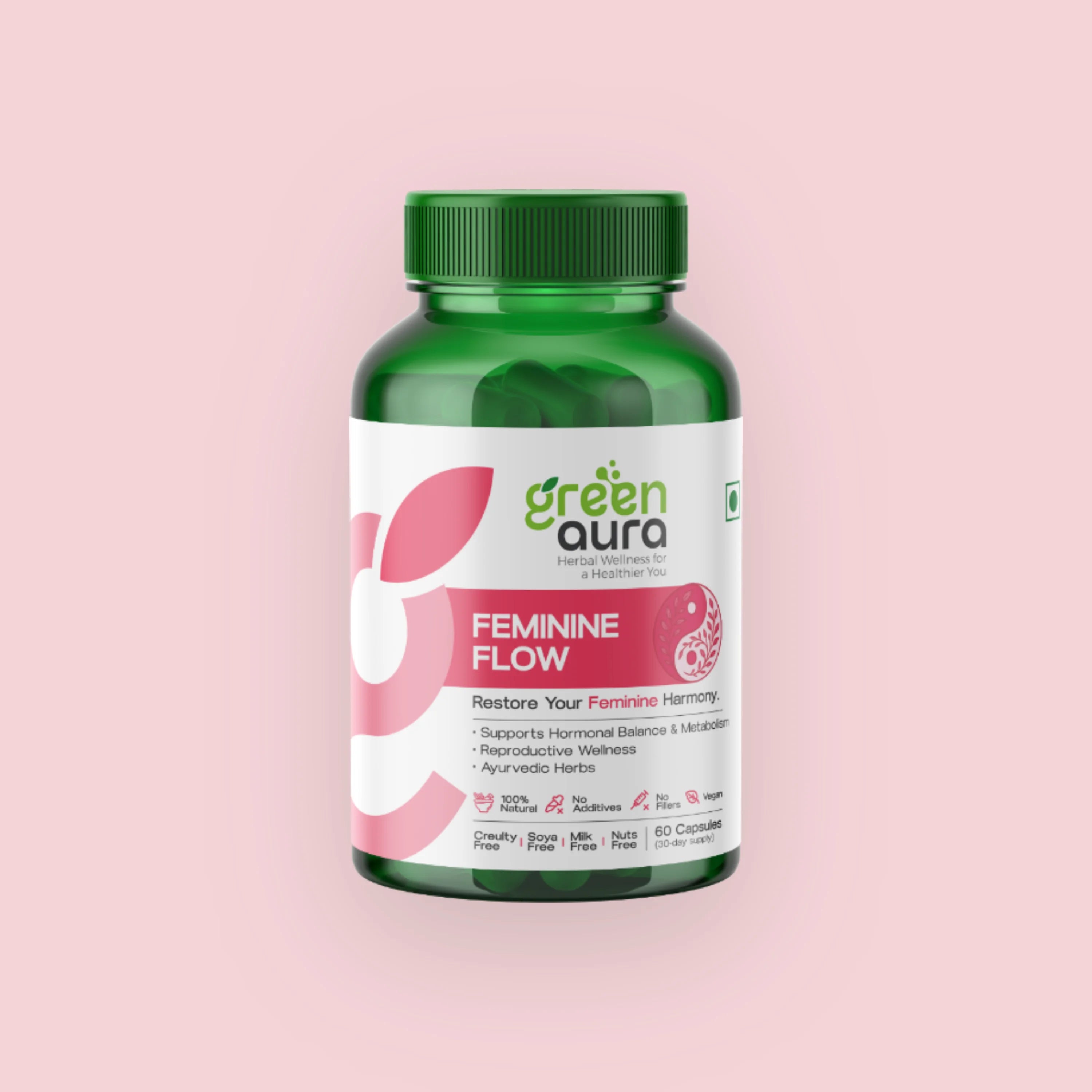
We make Feminine Flow in our own unit in Vijapur, Gujarat. It is a daily herbal food supplement for women's general wellness, made with eight herbs including Shatavari, Lodhra and Daruharidra, with the full formula in mg on the product page. The suggested use is 2 capsules a day for 90 days.
It is not a painkiller and is not meant for period pain. The finished product has not been tested in a clinical trial. Food supplement. Not for medicinal use.
The Women360 Herbal Kit combines Feminine Flow, UroEase and Golden Aura as a daily women's wellness set. Not sure what fits you? Take the Test. It takes two minutes.
Who should check with a doctor before taking Feminine Flow: anyone who is pregnant, trying to conceive or breastfeeding, anyone under 18, anyone on regular medication (including blood thinners or medicines for blood sugar, because Daruharidra contains berberine), and anyone with a diagnosed health condition.
For more everyday Ayurvedic habits, read Ancient Herbs, Modern Health.
From Green Aura
Herbal supplements with every milligram on the label
Put steady heat on your lower belly straight away and do a few minutes of gentle stretching. An over-the-counter painkiller can help too; ask a pharmacist or doctor which one suits you. Ginger water is a reasonable addition for most people.
Yes, for most people. Wrap it in a cloth, check the temperature on your hand, and do not sleep on an electric pad. Stop if your skin turns very red or blotchy.
Ginger has some of the better research among kitchen herbs for period pain, though the trials used measured doses rather than tea and many had quality issues. Ginger tea is a gentle, low-cost thing to try. Ask your doctor first if you take blood thinners.
Short use during the first days of a period is common. Follow your pharmacist's or doctor's advice on dose. If you need painkillers every cycle, or they stop working, see a doctor to rule out an underlying cause.
See a doctor if the pain stops your daily life, is getting worse, does not settle with painkillers, or comes with heavy or in-between bleeding, pain during sex or when using the toilet, or a swollen belly.
Heat, gentle movement, a pain diary and ginger in food are fine for teenagers. For any medicine or supplement, a parent should check with a doctor first. Our products are made for adults.
Heat and gentle movement have the best home evidence, a painkiller your pharmacist or doctor suggests is often the most effective step on a bad day, and ginger is the herb most worth trying. Keep a simple diary. And if your pain is getting worse or stopping your life, that is not something to bear in silence. Get it checked.
This article is for general information only and is not medical advice. Green Aura products are food supplements and are not intended to diagnose, treat, cure or prevent any disease. Please consult your doctor before starting any supplement, especially if you are pregnant, nursing, on medication or have a medical condition.


