Cart
0
You may also like


Your father has been squinting at the newspaper for two years. He holds his phone at arm's length to read WhatsApp. "Chashma ka number badh gaya hoga," he says, and that is the end of it. Nobody books the eye test. It is not urgent. It is only eyes.
For a long time most of us thought of eyes and memory as two separate departments. One belongs to the optician at the corner, the other to the neurologist you hope never to need. Research on eye health and brain health over the last few years has made that line look a lot thinner.
In 2024, one of the world's most respected dementia reviews added untreated vision loss to its list of risk factors people can change. Below is what that means, what the newer retina and Alzheimer's studies found, where the headlines run ahead of the evidence, and the one habit worth starting this year, for yourself or for your parents.
This is not a poetic phrase. The retina, the thin layer at the back of the eye that turns light into signals, grows out of the same tissue as the brain while a baby develops in the womb. It has nerve cells, it has tiny blood vessels much like the ones deep inside the brain, and unlike the brain, a doctor can look straight at it with a camera through the pupil, no scan or needle needed.
That makes the retina tempting for scientists. If changes in the brain leave a trace in the retina, an eye photo could one day become a cheap early warning sign. We are not there yet.
This is the strongest piece of evidence, and the most useful one for ordinary families. In 2024 the Lancet Commission on dementia, a large international panel that reviews the whole body of research, updated its list of risk factors that people can change. The list grew to 14. Two were new: high LDL cholesterol in midlife, and vision loss in later life that is left untreated (Livingston et al., The Lancet, 2024; plain-language summary from Alzheimer Europe).
The Commission estimates that all 14 factors together account for about 45% of dementia worldwide. Untreated vision loss on its own accounts for about 2%. That sounds small, but it is one of the easiest factors on the list to act on. Its recommendation was plain: eye tests should be accessible to everyone, and so should hearing aids, since hearing loss is on the same list.
Why would poor eyesight matter for the brain? Researchers are still working that out. One common explanation is simple: when you cannot see well, you read less, step out less, meet people less and do fewer things that keep the mind busy. Social isolation and physical inactivity are themselves on the Lancet list.
A UK Biobank study followed 12,364 adults aged 55 to 73 for about 11 years (Shang et al., British Journal of Ophthalmology, 2021). People with diabetes-related eye disease had about 61% higher risk of developing dementia over that period. Age-related macular degeneration came with about 26% higher risk, and cataract about 11%. Glaucoma on its own was not linked with overall dementia risk.
Diabetes-related eye disease had the biggest link. That matters a lot in India, and in Gujarat, where diabetes and high blood pressure are very common. Both conditions damage small blood vessels, and the eye and the brain are both full of them. India's own national ageing study estimates that about 7.4% of Indians over 60, roughly 8.8 million people, are living with dementia (LASI-DAD, via the US Fogarty International Center).
In early 2026, a study in Alzheimer's & Dementia compared retinal photos of 61 people with mild cognitive impairment (an early stage of memory and thinking problems) against 57 people without it (Kwapong et al., 2026). The group with memory problems had more twisted, sparser retinal vessels. Those eye changes tracked with signs of small-vessel damage on brain MRI, with lower memory test scores, and with Alzheimer's-related markers in the blood.
The authors themselves point out the limits: a modest sample, one centre, and each person seen only once.
Read this before you forward anything to the family WhatsApp group.
Put simply: the eye and the brain are closely connected, scientists are studying the retina as a possible early signal, and looking after your eyesight is a sensible part of looking after your overall health.
The practical message is surprisingly boring, which is good news. It costs little and most of it can start this month.
Not the quick number check at the spectacle shop. Ask for a full eye examination, including a look at the retina and an eye pressure check. A yearly visit after 40 is an easy habit to keep, like a birthday. Your eye doctor may suggest a different schedule for you, especially if you have diabetes, high blood pressure or a family history of eye disease.
Old glasses with the wrong number, or a cataract that has been "not ripe yet" for five years, both count as vision loss that is left untreated. If reading, recognising faces or walking at night has become harder, tell the eye doctor in exactly those words.
Diabetes can damage the retina quietly, long before you notice blurred vision. Diabetes care guidelines generally advise a retina check at least once a year, so ask your doctor. Keeping sugar and blood pressure within the targets your doctor sets matters for small blood vessels all over the body.
High blood pressure and high midlife LDL cholesterol are both on the Lancet list. A simple blood test and BP check once a year, especially after 40, gives you numbers you can actually work with alongside your doctor.
Hearing loss sits on the same list. If a parent keeps the TV loud or says "kya?" often, a hearing test belongs in the same annual visit.
Walk daily, stay in touch with friends, read, learn something new, play cards with the grandchildren. Physical inactivity and social isolation are both on the Lancet list, so this ordinary advice has real weight behind it.
First, to be completely clear: nothing in the research above is about our products. No supplement, ours included, has been shown to prevent dementia or protect against any eye disease, and none replaces an eye test, your diabetes or BP medicines, or your doctor's advice.
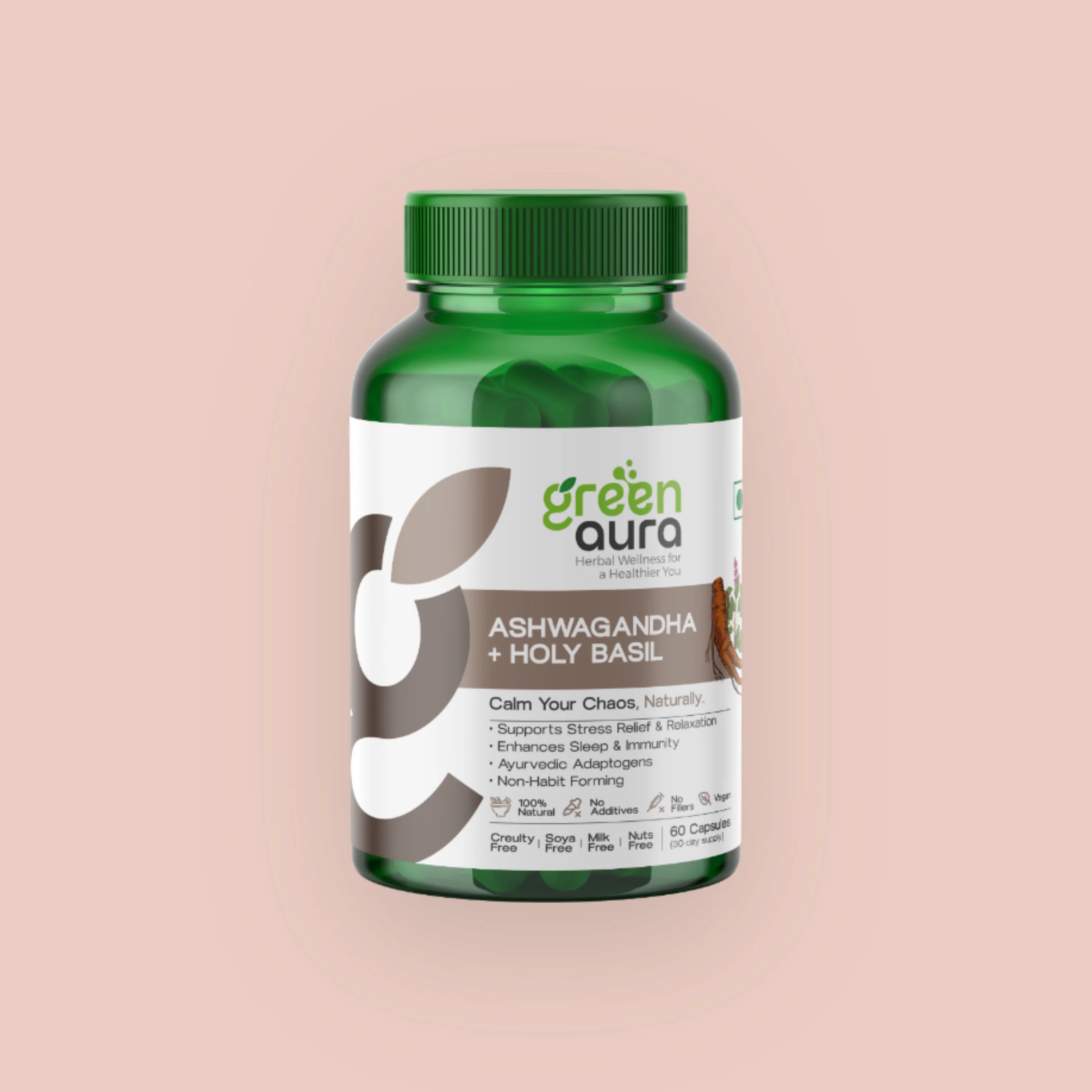
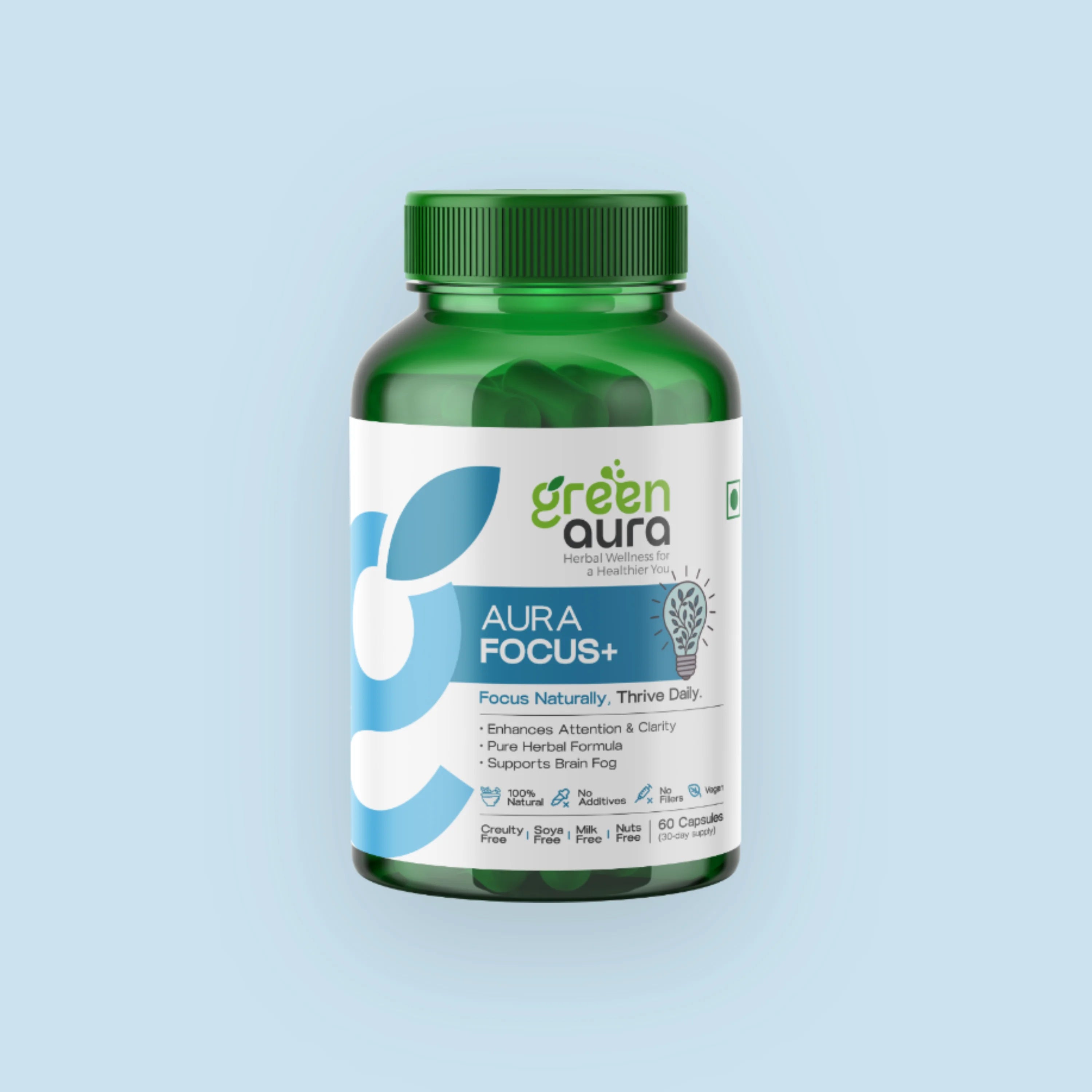
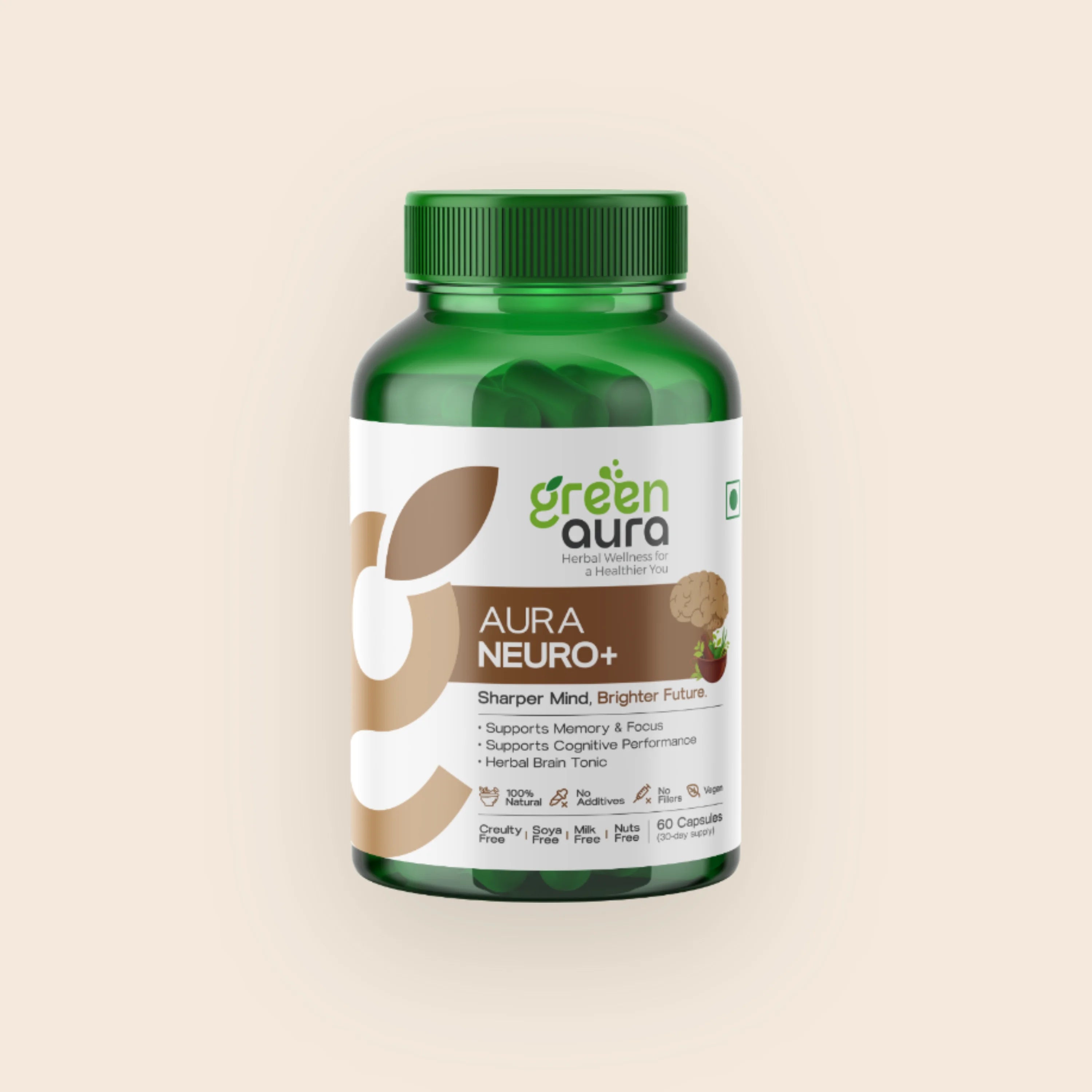
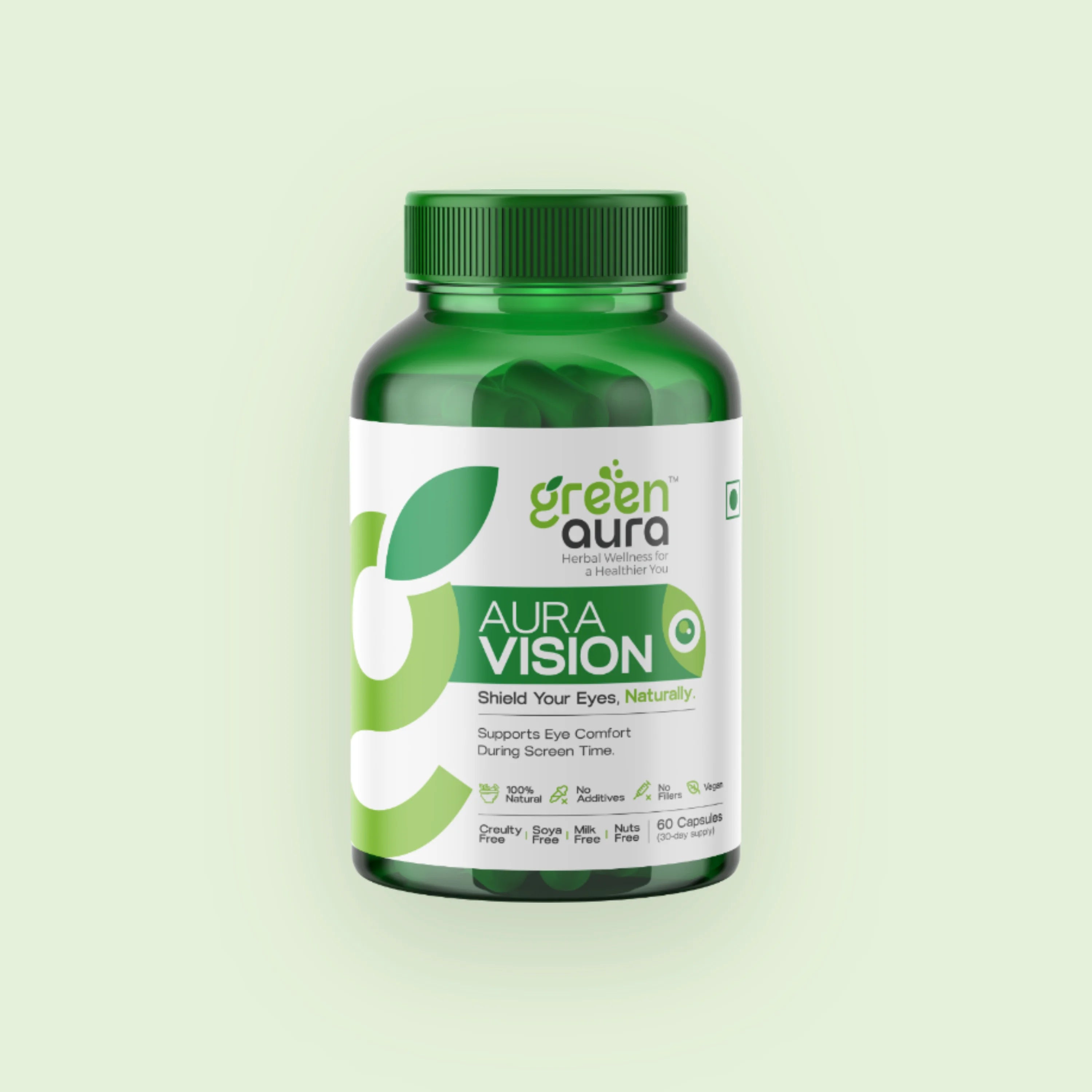
With that said, some readers ask what we make. We manufacture the Brain Health Kit at our own unit in Vijapur, Gujarat. It is a daily herbal routine that puts three of our formulas, Aura Vision, Aura Focus+ and Aura Neuro+, in one box, one capsule of each a day after a meal. It is made with herbs that have a long history of use in Ayurveda, including Brahmi, Shankhpushpi, Triphala and bilberry, and the full formula of each product is published in mg on its page. If you are not sure which formula suits you, you can Take the Test.
Who should check with a doctor first: the kit is for adults 18 and over. Avoid it during pregnancy or breastfeeding. Aura Neuro+ contains ashwagandha, so speak to your doctor first if you take thyroid medicine, sedatives, blood pressure or diabetes medicines, or have an autoimmune condition. Brahmi may interact with some medicines, so do not take a second Brahmi supplement on top of the kit.
Your eyes are not a crystal ball for your brain, at least not yet. But untreated vision loss is now officially counted among the things that raise dementia risk, and fixing it is often as simple as a yearly eye test and the right pair of glasses. If there is one thing to do after reading this, book that eye test, for yourself or for the parent who keeps saying the number has only gone up a little.
Related reading: Eye strain from mobile screens: what actually helps and How to increase concentration in studies.
From Green Aura
Herbal supplements with every milligram on the label
Yes. The retina develops from the same tissue as the brain and has similar small blood vessels. Studies show that certain eye conditions, and untreated vision loss, are linked with higher dementia risk. Researchers are still working out how strong the link is and why it exists.
The 2024 Lancet Commission lists untreated vision loss in later life as one of 14 changeable dementia risk factors, accounting for about 2% of cases worldwide. Getting vision problems checked and corrected is one of the simpler steps on that list.
Not today. Researchers are studying retinal photos and scans as possible early signals, but no eye test is approved to diagnose or predict dementia. An eye examination can, however, spot diabetes damage, high blood pressure changes and other conditions worth acting on.
A full eye examination once a year after 40 is a simple habit to build. If you have diabetes, high blood pressure or a family history of eye disease, your eye doctor may want to see you more often. Ask your own eye doctor for the right schedule.
In a large UK study of over 12,000 adults, diabetes-related eye disease, age-related macular degeneration and cataract were each linked with higher dementia risk, while glaucoma on its own was not. These are associations, not proof of cause, but they are another good reason to get these conditions checked and managed.
No supplement, including ours, has been shown to prevent dementia. Herbal supplements may be part of a daily wellness routine, but the steps with real evidence are eye and hearing checks, managing blood pressure, sugar and cholesterol, staying active and staying social.
Sources: Livingston et al., Dementia prevention, intervention, and care: 2024 report of the Lancet standing Commission; 2024 Lancet Commission summary (Alzheimer Europe); Shang et al., British Journal of Ophthalmology, 2021; Kwapong et al., Alzheimer's & Dementia, 2026; Robb et al., Age and Ageing, 2025; Fogarty International Center, dementia in India (LASI-DAD), 2023.
This article is for general information only and is not medical advice. Green Aura products are food supplements and are not intended to diagnose, treat, cure or prevent any disease. Please consult your doctor before starting any supplement, especially if you are pregnant, nursing, on medication or have a medical condition.


